
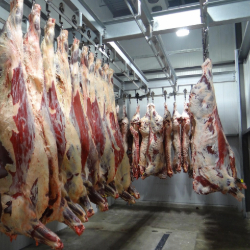
During the State of the Union (SOTU) address, President Trump made several claims about food prices, citing reductions in costs to consumers. Food inflation is a major issue for voters, and the President is hyper-focused on beef prices in particular prior to the 2026 mid-term elections. The final CPI numbers are in for 2025, and food prices were up 0.7 percent for the month, the largest monthly increase since October 2022. His claims on beef prices were accurate but need to be put in context. Since 2023, wholesale proteins have been on a rollercoaster. For the year, beef was up 13.1 percent, up from 5.8 percent in 2024. That compares to pork at 5.7 percent, down from 11.8 percent, and poultry is 3.1 percent, up from 0 percent in 2024. Beef...


 What You Need to Know Today: The U.S. dollar continued to strengthen Thursday as persistent inflation reinforced expectations for additional Federal Reserve interest rate hikes. Higher Treasury yields have helped support the dollar, potentially reducing the competitiveness of U.S. agricultural...
 In yesterday’s WASDE, USDA reduced its overall red meat and poultry production forecast for 2026 as declines in beef and broiler output more than offset increases in pork and turkey production. Fourth-quarter beef production was revised downward because of slower fed cattle marketings and...
 Key Takeaways: Dry bulk freight markets were stronger this week, but the rally was uneven and due to divergent dynamics across basins and vessel classes. Panamax markets were broadly higher, but Atlantic grain demand was primarily responsible while Asian activity was subdued. That trend...

From WPI Consulting
Infrastructure investment due diligence
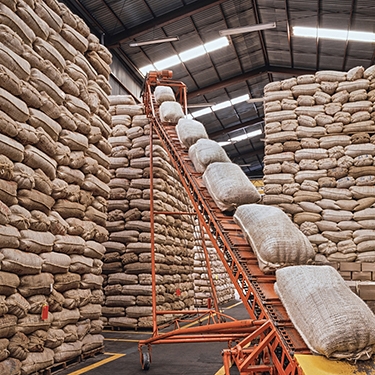
On behalf of a Canadian oilseed processer WPI's team provided market analysis, econometric modeling and financial due diligence in support of a $24 million-dollar investment in a Ukrainian crush plant. Consistent with WPI's findings, local production to supply the plant and the facility's output have expanded exponentially since the investment. WPI has conducted parallel work on behalf of U.S., South American and European clients, both private and public, in the agri-food space.