



The CBOT was solidly in the red on Wednesday while cattle futures regained some of their former strength. Markets had to process multiple headlines at the national/international political level, which led to some mild risk-off trade. Mostly, however, for grains, the looming WASDE dominated the day’s trade and created another day of sideways/lower but consolidative trade. Cattle futures initially pulled back on technical selling and macroeconomic jitters but eventually found solid buying support and saw a strengthening rally through the afternoon. The day’s trade signaled that traders are content to cautiously adjust positions ahead of the WASDE but also hinted that geopolitics may be about to throw additional volatility into the...


 What You Need to Know Today: Corn, wheat, and the soy complex all formed new contract or at least rally highs to close what has become one of the most uniformly bullish weeks in CBOT history. Escalations in the fighting between Russia and Ukraine and attacks on civilian merchant vessels show n...

 The Federal Reserve Board holds an annual meeting in Jackson Hole, Wyoming, each year about this time, and this year’s meeting is now. It’s always a “must-watch” event, but this year, amidst persistent inflation and with a new Fed chairman, Kevin Warsh, it drew additiona...


 You cannot escape the vortex of opinions about water scarcity in the Western United States, especially in the drought-stricken Colorado River Basin. Agriculture is the villain in many of these editorials. Agriculture uses too much water, so it should use less, is the refrain. We all wish it was...

From WPI Consulting
Infrastructure investment due diligence
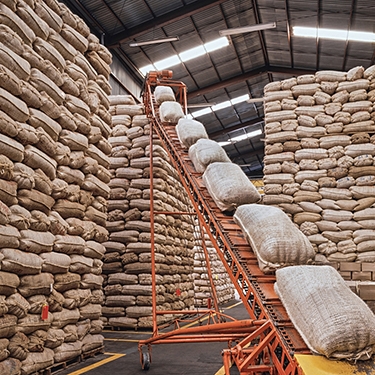
On behalf of a Canadian oilseed processer WPI's team provided market analysis, econometric modeling and financial due diligence in support of a $24 million-dollar investment in a Ukrainian crush plant. Consistent with WPI's findings, local production to supply the plant and the facility's output have expanded exponentially since the investment. WPI has conducted parallel work on behalf of U.S., South American and European clients, both private and public, in the agri-food space.