



The CBOT saw distinctly mixed trade with price action being largely determined by one of two factors: either bullishness from Ukraine’s attack on interior Russia or bearishness from favorable weather in South America. Based solely upon that statement, you can probably figure out which markets did what. If you guess that wheat was higher on the Black Sea “war risk” and corn and the soy complex fell on South American weather, you’d be exactly right. It now looks like these two factors will be the primary drivers of near-term price action, with exports, of course, playing their seasonally critical role in determining corn and soybean markets’ direction.Outside markets were mixed with U.S. stocks seeing strength in the tech sector and weakness...


 What You Need to Know Today: Corn, wheat, and the soy complex all formed new contract or at least rally highs to close what has become one of the most uniformly bullish weeks in CBOT history. Escalations in the fighting between Russia and Ukraine and attacks on civilian merchant vessels show n...

 The Federal Reserve Board holds an annual meeting in Jackson Hole, Wyoming, each year about this time, and this year’s meeting is now. It’s always a “must-watch” event, but this year, amidst persistent inflation and with a new Fed chairman, Kevin Warsh, it drew additiona...


 You cannot escape the vortex of opinions about water scarcity in the Western United States, especially in the drought-stricken Colorado River Basin. Agriculture is the villain in many of these editorials. Agriculture uses too much water, so it should use less, is the refrain. We all wish it was...

From WPI Consulting
Infrastructure investment due diligence
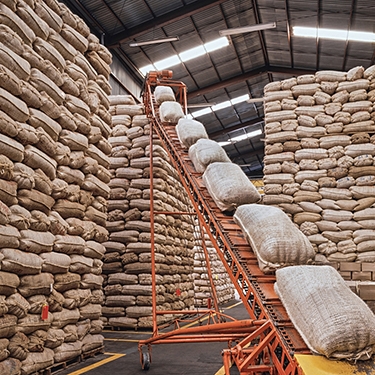
On behalf of a Canadian oilseed processer WPI's team provided market analysis, econometric modeling and financial due diligence in support of a $24 million-dollar investment in a Ukrainian crush plant. Consistent with WPI's findings, local production to supply the plant and the facility's output have expanded exponentially since the investment. WPI has conducted parallel work on behalf of U.S., South American and European clients, both private and public, in the agri-food space.