


The CBOT managed to recover from a dramatic overnight plunge with soybeans leading the fight to put values back in the green. Most of the news coming out of the weekend was bearish – between larger Russian wheat crop projections, the advancing South American harvests, and generally favorable weather – which set markets on edge after Monday night’s opening. The soy complex managed to recover after the NOPA crush report came in well above expectations, and soybeans and soyoil managed to finish in the green. The grains, however, suffered a different fate as bearish technicals triggered additional fund selling, particularly in wheat. The day’s trade seemed to confirm the diverging nature of the soy and grain comple...


 What You Need to Know Today: Markets got a surprise with a corn yield of 181.2 bushels/acre in the October WASDE, above the average estimate of 177.6 bushels/acre and up from USDA’s September estimate of 178.5 bushels/acre. Although stronger demand is expected to absorb some of the addit...

 Key Takeaways: On Friday afternoon, President Trump announced that Russia will “immediately supply over 300,000 Tons of Diesel Fuel” to the United States. The deal, typical of this administration, is light on details but promises an additional 500,000 tons in November and 1 m...

 The USDA has lowered its 2026 red meat production forecasts slightly while forecasting a slight increase in broiler production. Beef is now projected at 24.802 billion pounds, 75 million pounds less than in September. Cow slaughter is expected to be up; however, this will be offset by lower ste...

From WPI Consulting
Infrastructure investment due diligence
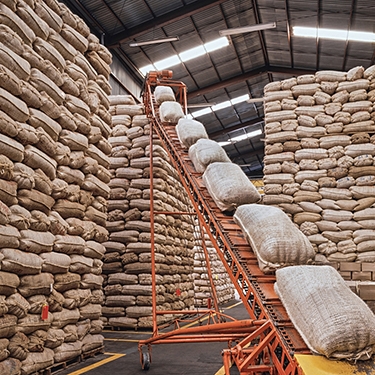
On behalf of a Canadian oilseed processer WPI's team provided market analysis, econometric modeling and financial due diligence in support of a $24 million-dollar investment in a Ukrainian crush plant. Consistent with WPI's findings, local production to supply the plant and the facility's output have expanded exponentially since the investment. WPI has conducted parallel work on behalf of U.S., South American and European clients, both private and public, in the agri-food space.