



The dumpster fire that is the wheat market continued to rage on Wednesday with Paris, CBOT, and KCBT markets all scoring new contract lows. The fundamental reason for the weakness is hardly new – rampant competition from the Black Sea and Europe – but prices in the physical market continue to drift below major psychological benchmarks (e.g., $200/MT) in a signal that traders are indeed scrambling to buy demand. To their credit, the corn and soybean markets have remained insulated from the drama in wheat futures and the corn market posted slight gains at mid-week and maintained their sideways trading pattern. Soybeans were no more interesting with mostly lower trade resulting in a fractionally lower close despite modest gains in...


 What You Need to Know Today: End-of-month profit taking sent the CBOT broadly lower, though corn and soybeans managed to post small gains to continue their rallies. Turkey’s foreign ministry claimed to have a plan to ensure safe passage for both Ukrainian and Russian grain vessels via th...
 Developer's Note 24 August 2026: WPI recently completed an exercise that updated the codebase for this app and solved some of the discrepancies between our five-year average calculation and USDA's. There are a few lingering cases where early (late) starts (finishes) to the crop cycle resu...
 Key Takeaways: Corn and soybean prices rallied sharply last week as declining U.S. production expectations collided with strong demand, raising the prospect of tighter supplies and leaving the market with a smaller margin for further yield losses. The USDA’s lower August yield estimates...

From WPI Consulting
Infrastructure investment due diligence
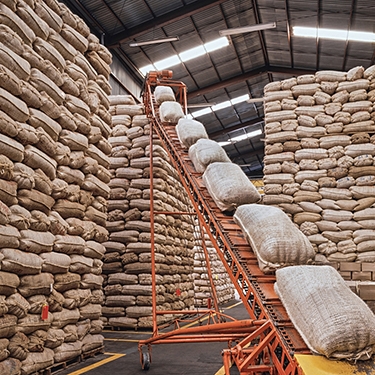
On behalf of a Canadian oilseed processer WPI's team provided market analysis, econometric modeling and financial due diligence in support of a $24 million-dollar investment in a Ukrainian crush plant. Consistent with WPI's findings, local production to supply the plant and the facility's output have expanded exponentially since the investment. WPI has conducted parallel work on behalf of U.S., South American and European clients, both private and public, in the agri-food space.