


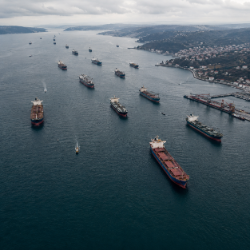
Macro: Trade Flows Set the Tone Persian Gulf crude flows appear to be improving, with anecdotal estimates suggesting as much as 7–8 million barrels per day may now be leaving the region — nearly double the mid-July pace. That helps explain why crude has not maintained the full geopolitical premium many expected. More barrels are moving, but that does not mean the energy situation has normalized. Wednesday’s EIA report was supportive, with U.S. gasoline and distillate inventories both falling more than expected and reaching their lowest seasonal levels in at least six years. Today’s natural-gas storage data added a modestly supportive signal, with inventories rising less than expected and well below the normal seasona...


 WPI Grain Prices and Freight Rate App Note: you can also visit the app directly by clicking here. Supplemental Information The section below offers a concise view of the options available in the current version of the WPI FOB Price and Freight Rate app, along with a short “How To”...
 Russian Grain Markets: 12–16 October 2026 During the week in review, the Russian grain market began recovering after an extended decline driven largely by Black Sea logistics bottlenecks, a good crop and weaker global demand in traditional Russian markets. Russia is beginning to harvest c...
 What You Need to Know Today: Corn and soybeans were under heavy selling pressure as weaker (or at least as-expected) export demand runs into an accelerating harvest pace with more grain available in the spot market. Corn and soybean harvest progress remains below average across the U.S., espec...

From WPI Consulting
Forecasting developments in production agriculture
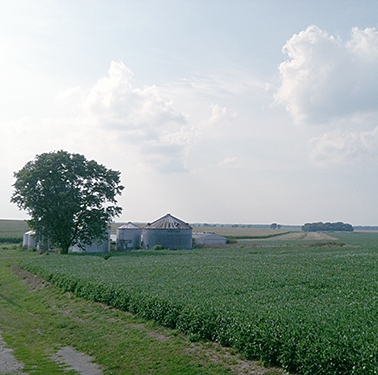
On behalf of a private U.S. agricultural technology provider, WPI’s team generated an econometric model to forecast the movement of concentrated corn production north and west from the traditional U.S. Corn Belt. WPI’s model has subsequently provided quantitative support to a multi-million-dollar investment into short-season corn variety development. WPI’s methodology included a series of interviews with regional grain elevators and seed consultants. Emphasizing outreach and communication with stakeholders who possess intimate sectoral knowledge – on-the-ground insights – is a regular component of WPI’s methodologies, made possible by WPI’s ever-growing network of industry contacts.