

 Policy Deference The bilateral trade balance is a narrow way to look at the relative relationship between two countries. The government of Mexican President Claudia Sheinbaum Pardo is seeking to ignore its own regulations that guide the application of the General Law on Adequate and Sustainable...
 WPI Grain Prices and Freight Rate App Note: you can also visit the app directly by clicking here. Supplemental Information The section below offers a concise view of the options available in the current version of the WPI FOB Price and Freight Rate app, along with a short “How To”...
 Under the theory of economies of scale, the size of farms, like that of all industries, should increase over time due to improvements in productivity. Farmers themselves understand that the more land they farm, the greater their output and, thus, the larger their potential incomes. Government p...
 WPI has officially launched Transportation Perspectives as a standalone weekly report separate from our Ag Perspectives articles and analysis. Current Ag Perspectives subscribers will have gratis access to the report through 16 April 2026. Please email us or subscribe online after this date to...

From WPI Consulting
Forecasting developments in production agriculture
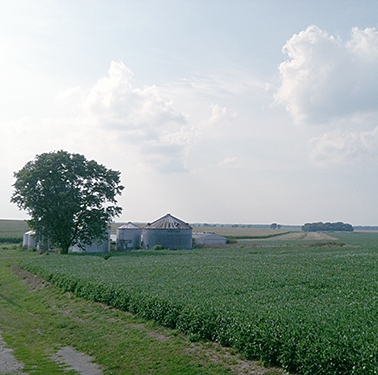
On behalf of a private U.S. agricultural technology provider, WPI’s team generated an econometric model to forecast the movement of concentrated corn production north and west from the traditional U.S. Corn Belt. WPI’s model has subsequently provided quantitative support to a multi-million-dollar investment into short-season corn variety development. WPI’s methodology included a series of interviews with regional grain elevators and seed consultants. Emphasizing outreach and communication with stakeholders who possess intimate sectoral knowledge – on-the-ground insights – is a regular component of WPI’s methodologies, made possible by WPI’s ever-growing network of industry contacts.