
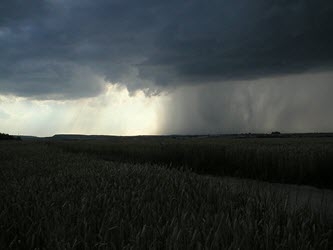
Iraq intends to expand the area planted to wheat by 20 percent, but production may not follow. But like much of the Middle East, wheat output is highly dependent on rainfall. Production in Iraq has been far more volatile than the area under sowing. Climate change may worsen crop output. Wars and political strife do not help and seeking to fill the void caused by Black Sea disruptions is understandable. Alternative approaches include increased investment in irrigation, or producing and exporting higher value alternative crop to trade for wheat grown more easily elsewhere. After all, Iraq and other countries correctly and effectively use wheat imports as a one-for-one substitution for domestic shortfalls. But food security is always fa...



 What You Need to Know Today: Markets got a surprise with a corn yield of 181.2 bushels/acre in the October WASDE, above the average estimate of 177.6 bushels/acre and up from USDA’s September estimate of 178.5 bushels/acre. Although stronger demand is expected to absorb some of the addit...

From WPI Consulting
Weighing in on strategic realignment

WPI’s team was retained by the governing board of a U.S. industry organization to review a decision, reached by vote, to invest significant assets into the development and management of an export trading company. WPI’s team conducted a formal review of this decision and concluded that the current level of market saturation would limit the benefits of the investment. Based on WPI’s analysis and recommended actions, the board subsequently reversed its decision and undertook a strategic planning effort to identify more impactful investments. On behalf of numerous clients, WPI has not only assisted in identifying strategic paths but also advised their implementation.