U.S. Talk Representative The Generalized System of Preferences (GSP) that grants duty free access to products from poorer countries expired almost four years ago. The African Growth and Opportunity Act (AGOA), which provides similar nonreciprocal preferential access to the U.S. market but aimed at Sub-Saharan Africa is scheduled to expire in September 2025. There are efforts on Capitol Hill to renew GSP and extend AGOA for another 16-20 years. Those trading under both programs worry about having too many criteria for eligibility and setting the bar on rules of origin too high. However, one complaint is that the Biden Administration is not engaged in either issue. One industry representative suggested that someone needs to put Trade instead...



 What You Need to Know Today: A third U.S. border crossing (Columbus, New Mexico) has reopened to Mexican cattle imports following nearly two years of restrictions related to New World screwworm. The reopening could gradually improve feeder cattle availability, although more than 60 confi...

 Yesterday, the USDA’s Agricultural Marketing Service (AMS) released a new report of negotiated cash purchases of cattle under the mandatory price report. The report included Colorado, New Mexico, Oklahoma, Texas, and Kansas. The goal of the report was to solve the confidentiality issues e...

 Key Takeaways: U.S. soybean crushing began in 1911 and saw its most rapid expansion during the 1930s amid the broader agricultural and technology revolutions of the time. After peaking in the early 2000s, the soybean crushing industry went through a downturn as poor crush margins forced...

From WPI Consulting
Infrastructure investment due diligence
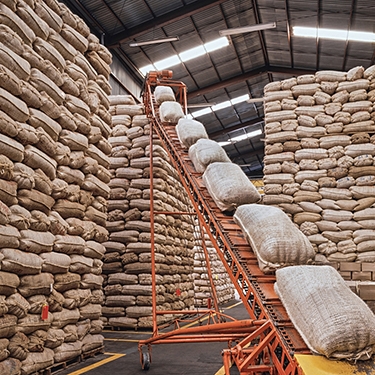
On behalf of a Canadian oilseed processer WPI's team provided market analysis, econometric modeling and financial due diligence in support of a $24 million-dollar investment in a Ukrainian crush plant. Consistent with WPI's findings, local production to supply the plant and the facility's output have expanded exponentially since the investment. WPI has conducted parallel work on behalf of U.S., South American and European clients, both private and public, in the agri-food space.