Second thoughts in policymaking are usually better than no thought at all. If it is meant to be, it will. Almost two years ago European politicians agreed to end the selling of automobiles with internal combustion engines (ICE), and to slash the use of fertilizer (N-P-K) and pesticides in crop production. Now a few but powerful member states are having second thoughts about the ICE ban. No doubt it is tied to the number of workers employed in the industry. But if the ICE ban falls on concerns about jobs, doesn’t that mean making large reductions in fertilizer and pesticide use are at risk on food security rounds? After all, there has already been a proposed revision to previous limits on the number of livestock units...



 On Friday, at 6:57 AM, President Donald Trump announced, via a social media post, a 90-day window during which up to 300,000 metric tons of product for ground beef could be imported outside of tariff-rate quotas—a move aimed at bringing down costs for American consumers. This is the secon...

 In agriculture and food processing, we think a lot about infrastructure: transportation and storage, processing and packaging, distribution and delivery. It is a physical system of roads, railroads, and rivers; concrete and steel storage; processing plants, warehouses, and machinery; and, event...
 Key Takeaways: The Panama Canal’s draft restrictions and decreasing rainfall outlook are driving big moves in dry bulk markets this week. Panamax markets are sharply lower as the economics of moving freight across the Canal are deteriorating rapidly, leading to support in Supramax vessels...
 Key Takeaways: Weather conditions in Europe have continued to deteriorate following both the EU MARS’ latest balance sheet update and the August WASDE, leaving “official” estimates lagging behind the reality observed on the ground. WPI’s models anticipate a 4 perc...

From WPI Consulting
Forecasting developments in production agriculture
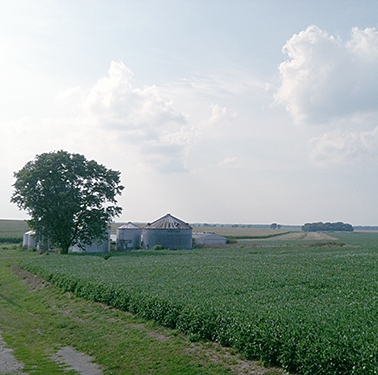
On behalf of a private U.S. agricultural technology provider, WPI’s team generated an econometric model to forecast the movement of concentrated corn production north and west from the traditional U.S. Corn Belt. WPI’s model has subsequently provided quantitative support to a multi-million-dollar investment into short-season corn variety development. WPI’s methodology included a series of interviews with regional grain elevators and seed consultants. Emphasizing outreach and communication with stakeholders who possess intimate sectoral knowledge – on-the-ground insights – is a regular component of WPI’s methodologies, made possible by WPI’s ever-growing network of industry contacts.